
Each cap is a copper block that makes up a design unit. Cap are made of 1.5 cm wide copper stripes that are bent into the shape of the design. Smaller pieces of wire are used for the dots. When complete, the pattern of copper strips is attached to the handle.
The cap must be precisely made. This is especially true if the pattern is to be stamped on both sides of the fabric. It is imperative that both sides of the cap are identical so that pattern will be consistent.
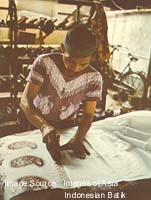 Sometimes cap are welded between two grids like pieces of copper that will make a base for the top and the bottom. The block is cut in half at the center so the pattern on each half is identical. Cap vary in size and shape depending on the pattern they are needed for. It is seldom that a cap will exceed 24 cm in diameter, as this would make the handling too difficult.
 Men usually handle the application of wax using cap. A piece of cloth that involves a complicated design could require as many as ten sets of cap. The usage of cap, as opposed to canting, to apply the wax has reduced the amount of time to make a cloth.
Today, batik quality is defined by cap or tulis, the second meaning hand-drawn designs which use a canting, or kombinasi, a combination of the two techniques.


 Posts
Posts



0 comments:
Post a Comment