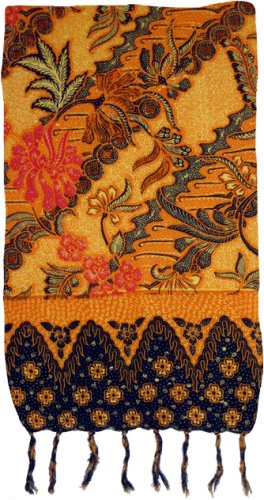
The distinctive designs of batik pesisir are those from the northern inshore cities of Java, including Pekalongan and Cirebon. The designs show Asiatic influence through their use of brighter colors, flowers and cloud motifs.
Friday, April 23, 2010
Batik Pesisir


Batik Sudagaran

Batik Indonesia

Batik Belanda

Batik Kraton

As a specific attire in the dress code of the courts of Java, Batik Kraton is easily recognized through its sub-divisions, Batik Kasunanan Surakarta, Batik Kasultanan Yogyakarta, Batik Pura Mangkunegaran and Batik Pura Pakualaman. Over time, changes and modifications distinguished Batik Mangkunegaran from Batik Kasunanan, even though both originated from the same source. Batik Pakualaman, from the city of Yogyakarta, originated from both Kasunan and Kasultanan design traditions and is more unique because the whole process was completed in Surakarta.
Batik Designs A Cultural Development Influenced by Changes in Time And Environment
 One of the fascinating characteristics of Asiatic batik is the changes in style, thought and color which hit become about through exposure to different foreign cultures. Throughout Asiatic history, each time the rich batik tradition has become into contact with foreigner traders or colonial rulers, they hit influenced the development of batik. Some of the more famous results are described below.
Modern Batik

Fashion designers such as Iwan Tirta hit aggressively introduced batik into the world fashion scene. They hit done much to promote the Indonesian prowess of batik dress, in its tralatitious and past forms. The horizon of batik is continuing to widen. While the design process has remained essentially the same over the terminal century, the process shows great advancement in past decades. Traditionally, batik was sold in 2 1/4 meter lengths utilised for kain panjang or sarong in tralatitious dress. Now, not only is batik utilised as a material to garb the manlike body, its uses also include furnishing fabrics, heavy sheet wall hangings, tablecloths and household accessories. Batik techniques are utilised by famous artists to create batik paintings which petition many homes and offices. Fine quality handstitched batik is rattling expensive and the creation of such works is rattling limited. However, in a Modern Batikworld that is dominated by machines there is an increasing interest in materials that hit been handmade. Batik is digit of these materials.
Washing Batik

Parang

Ceplok

Kawung

Batik Design

In general, there are two categories of batik design: nonrepresentational motifs (which tend to be the earlier designs) and free form designs, which are supported on stylized patterns of natural forms or imitations of a woven texture. Nitik is the most famous design illustrating this effect.
Certain areas are famous for a ascendance of certain designs. Central Bahasa designs are influenced by tralatitious patterns and colors. Batik from the north coast of Java, near Pekalongan and Cirebon, have been greatly influenced by Chinese society and gist brighter colours and more intricate flower and darken designs.
High fashion designs drawn on silk are rattling popular with wealthy Indonesians. These exceptionally high-quality pieces can take months to create and costs hundreds of dollars.
Special Treatments to the Batik Cloth (Prada or Gold Cloth)

Dyeing

The waxed artifact is immersed in the colour bath of the first color. The amount of time it is mitt in the bath determines the hue of the color; darker colours order longer periods or numerous immersions. The artifact is then put into a algid water bath to accustom the wax. When the desirable colouration has been achieved and the artifact has dried, rise is reapplied over the areas that the artificer wishes to maintain the first colour colouration or another colouration at a after stage in the ending process.
When an Atlantic that has been awninged with rise previously needs to be exposed so that it can be dyed, the practical rise is scraped away with a small knife. The Atlantic is then sponged with hot water and resized with rice polyose before it is re-immersed in the ensuant colour bath.
If a marble gist is desired, the rise is designedly cracked before being settled in the colour bath. The colour seeps into the tiny cracks that create the fine lines that are symptomatic of batik. Traditionally, cracks were a clew of base textile especially on indigo colouration batik. On brown batik, however, the marble gist was accepted.
The number of colours in batik represents how many times it was immersed in the colour bath and how many times rise had to be practical and removed. A multicolored batik represents a lot more work that a single or two-color piece. Numerous colour processes are usually echolike in the toll of the cloth. Nowadays, chemical dyes have pretty much replaced tralatitious dyes, so colours are long and much more generously used.
Waxing

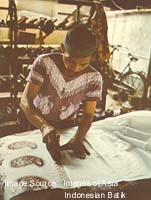
Artisans use the rise to retrace the pencil summary on the fabric. A small drop textile is kept on the woman. s lap to protect her from hot dripping wax. The stem of the canting is held with the correct assistance in a horizontal function to prevent any unplanned spillage, which greatly reduces the value of the final cloth. The left assistance is placed behind the artifact for support. The spout does not contact the fabric, but it held just above the area the artificer is working on. To secure the ornament is substantially defined, batik is waxed on both sides. True tulis batik is reversible, as the ornament should be identical on both sides.
The most old artisans normally do first waxings. Filling in of large areas may be entrusted to less old artisans. Mistakes are rattling difficult to correct. If rise is accidentally spilt on the cloth, the artificer will try to remove the discarded rise by sponging it with hot water. Then a hot iron rod with a arching end is utilised to try and displace off the remaining wax. Spilled rise can never be completely distant so it is imperative that the artisans are rattling careful. If the container method is utilized, this procedure is normally done by men. The container are dipped into melted wax. Just low the opencast of the melted rise is a bifold textile approximately 30 centimeters square. When this textile is saturated with rise it acts like a walk pad.
Better quality batik may be waxed utilizing canting in digit part of Indonesia and then sent to added part of Indonesia where the container part of the process is completed. On meliorate quality container artifact enthusiastic tending is taken to correct the ornament exactly. Lower evaluate batik is characterized by covering lines or lightened colored lines indicating the container was not practical correctly.

Design Procces (Step 8)
Wax is applied to the area of the artifact that the artist wishes to remain white. The artifact is submerged in the final dye bath. In this case it is brown. Any areas of the cloth that have not been awninged with wax will become brown.

Design Procces (Step 7)
Wax is applied to the area of the fabric that the artist wishes to remain white.

Design Procces (Step 6)
Wax is applied to the area of the fabric that the artist wishes to remain the indigo blue color.

Design Procces (Step 5)
All the wax that has been applied thus far is removed. This is finished by vaporisation the wax and scraping it soured and also by applying hot water and sponging soured the remaining wax.

Design Procces (Step 4)
The cloth is dyed in the second dye bath. In this case it is a navy blue. Any areas that are not awninged by wax will become dark blue.

Design Procces (Step 3)
Second application of wax is applied. In this case it is a dark brown color. A poorer quality of wax is used to cover larger areas of cloth. The darker color helps to differentiate it from the first wax applied. Any parts that are covered with this wax application will remain the indigo color.

Design Procces (Step 2)
The cloth is dyed in the first colour bath. In this case the first dyebath is indigo blue. The area of the cloth where the wax was applied in Step 1 will remain white.

Design Process (Step 1)
The first wax is applied over the penciled-in outline of the pattern. Almost always the original cloth is white or beige.

Dyes
 Traditional colors for Central Javanese batik were made from natural ingredients and consisted primarily of beige, blue, brown and black.
The oldest color that was used in traditional batik making was blue. The color was made from the leaves of the Indigo plant. The leaves were mixed with molasses sugar and lime and left to stand overnight. Sometimes sap from the Tinggi tree was added to act as a fixing agent. Lighter blue was achieved by leaving the cloth in the dye bath for short periods of time. For darker colors, the cloth would be left in the dye bath for days and may have been submerged up to 8 - 10 times a day. In traditional batik, the second color applied was a brown color called soga. The color could range from light yellow to a dark brown. The dye came from the bark of the Soga tree. Another color that was traditionally used was a dark red color called mengkuda. This dye was created from the leaves of the Morinda Citrifolia.
The final hue depended on how long the cloth was soaked in the dye bath and how often it was dipped. Skilled artisans can create many variations of these traditional colors. Aside from blue, green would be achieved by mixing blue with yellow; purple was obtained by mixing blue and red. The soga brown color mixed with indigo would produce a dark blue-black color.
Cap

Each cap is a copper block that makes up a design unit. Cap are made of 1.5 cm wide copper stripes that are bent into the shape of the design. Smaller pieces of wire are used for the dots. When complete, the pattern of copper strips is attached to the handle.
The cap must be precisely made. This is especially true if the pattern is to be stamped on both sides of the fabric. It is imperative that both sides of the cap are identical so that pattern will be consistent.
 Sometimes cap are welded between two grids like pieces of copper that will make a base for the top and the bottom. The block is cut in half at the center so the pattern on each half is identical. Cap vary in size and shape depending on the pattern they are needed for. It is seldom that a cap will exceed 24 cm in diameter, as this would make the handling too difficult.
 Men usually handle the application of wax using cap. A piece of cloth that involves a complicated design could require as many as ten sets of cap. The usage of cap, as opposed to canting, to apply the wax has reduced the amount of time to make a cloth.
Today, batik quality is defined by cap or tulis, the second meaning hand-drawn designs which use a canting, or kombinasi, a combination of the two techniques.
Wax
Different kinds and qualities of wax are used in batik. Common waxes used for batik consist of a mixture of beeswax, used for its malleability, and paraffin, used for its friability. Resins can be added to increase adhesiveness and animal fats create greater liquidity.
Wajan

Batik Design Tools


Canting have different sizes of spouts (numbered to correspond to the size) to achieve varied design effects. The spout can vary from 1 mm in diameter for very fine detailed work to wider spouts used to fill in large design areas. Dots and parallel lines may be drawn with canting that have up to 9 spouts. Sometimes a wad of cotton is fastened over the mouth of the canting or attached to a stick that acts as a brush to fill in very large areas.
Selection And Preparation Of The Cloth For Batik

The cloth that is used for batik is washed and boiled in water many times prior to the application of wax so that all traces of starches, lime, chalk and other sizing materials are removed. Prior to the implementation of modern day techniques, the cloth would have been pounded with a wooden mallet or ironed to make it smooth and supple so it could best receive the wax design. With the finer machine-made cotton available today, the pounding or ironing processes can be omitted. Normally men did this step in the batik process.
Strict industry standards differentiate the different qualities of the cloth used today, which include Primissima (the best) and Prima. The cloth quality is often written on the edge of the design. A lesser quality cloth which is often used in Blaco.
A Brief History

Although there is mention of 'fabrics highly decorated' in Dutch transcripts from the 17th century, most scholars believe that the intricate Javanese batik designs would only have been possible after the importation of finely woven imported cloth, which was first imported to Indonesia from India around the 1800s and afterwards from Europe beginning in 1815. Textile patterns can be seen on stone statues that are carved on the walls of ancient Javanese temples such as Prambanan (AD 800), however there is no conclusive evidence that the cloth is batik. It could possibly be a pattern that was produced with weaving techniques and not dying. What is clear is that in the 19th century batik became highly developed and was well ingrained in Javanese cultural life.
Other scholars disagree that batik was only reserved as an art form for royalty, as they also feel its use was prevalent with the rakyat, the people. It was regarded an important part of a young ladies accomplishment that she be capable of handling a canting (the pen-like instrument used to apply wax to the cloth) with a reasonable amount of skill, certainly as important as cookery and other housewifery arts to Central Javanese women.
Batik, Traditional Fabric Of Indonesia
 It would be impossible to visit or live in Indonesia and not be exposed to one of the country's most highly developed art forms, batik. On your first visit to a batik store or factory you will undoubtedly experience an overwhelming stimulation of the senses - due to the many colors, patterns and the actual smell of batik. Only through repeated visits and a bit of study will the types of designs and their origins become apparent. The word batik is thought to be derived from the word 'ambatik' which translated means 'a cloth with little dots'. The suffix 'tik' means little dot, drop, point or to make dots. Batik may also originate from the Javanese word 'tritik' which describes a resist process for dying where the patterns are reserved on the textiles by tying and sewing areas prior to dying, similar to tie dye techniques. Another Javanese phase for the mystical experience of making batik is “mbatik manah” which means “drawing a batik design on the heart”.
Maintaining Batik

For both batik tulis and batik cap, the following rules apply:
- Hand wash, or best just soak the cloth
- Use very little detergent, best to use lerak
- Hang the batik directly, do not squeeze the cloth
- Do not hang in direct sunlight
- The iron should not directly touch the cloth, best to use a steam iron
- Silk batik is best dry-cleaned
- Do not spray perfume onto the cloth directly
Industrialization Of Technique

Batik print is the common name given to fabric which incorporates batik pattern without actually using the wax-resist dyeing technique. It represents a further step in the process of industrialization, reducing the cost of batik by mass-producing the pattern repetitively, as a standard practice employed in the worldwide textile industry.
Procedure

Thin wax lines are made with a canting, a wooden handled tool with a tiny metal cup with a tiny spout, out of which the wax seeps.
 After the last dyeing, the fabric is hung up to dry. Then it is dipped in a solvent to dissolve the wax, or ironed between paper towels or newspapers to absorb the wax and reveal the deep rich colors and the fine crinkle lines that give batik its character. This traditional method of batik making is called batik tulis.
 For batik prada, gold leaf was used in the Yogjakarta and Surakarta area. The Central Javanese used gold dust to decorate their prada cloth. It was applied to the fabric using a handmade glue consisting of egg white or linseed oil and yellow earth. The gold would remain on the cloth even after it had been washed. The gold could follow the design of the cloth or could take on its own design. Older batiks could be given a new look by applying gold to them.
Sumatra

- Jambi Batik. Trade relations between the Melayu Kingdom in Jambi and Javanese coastal cities have thrived since the 13th century. Therefore, the northern coastal areas of Java (Cirebon, Lasem, Tuban, and Madura) probably influenced Jambi in regard to batik. In 1875, Haji Mahibat from Central Java revived the declining batik industry in Jambi. The village of Mudung Laut in Pelayangan district is known for producing Jambi batik. This Jambi batik, as well as Javanese batik, influenced the batik craft in the Malay peninsula.
- Riau Batik.
- Palembang Batik.
- Aceh Batik.
Bali

Indonesian Batik from other areas (Java)

- Tasikmalaya Batik. This type of batik is produced by Sundanese people in the Tasikmalaya district of West Java province. Tasikmalaya Batik has its own traditional motif such as umbrella. Center of Tasikmalaya Batik can be found in Ciroyom District about 2 km from city center of Tasikmalaya.
- Garut Batik. This type of batik is produced by Sundanese people in the Garut district of West Java province. Despite applying traditional Javanese court motifs such as parang, Garut batik uses lighter and brighter colors compared to Javanese court batik.
- Banten Batik. This type of batik employs bright and soft pastel colors. It represents a revival of a lost art from the Sultanate of Banten, rediscovered through archaeological work during 2002-2004. Twelve motifs from locations such as Surosowan and several other places have been identified.
- Java Hokokai Batik. This type is characterized by flowers in a garden surrounded by butterflies. This motif originated during the Japanese occupation of Java in the early 1940s.
Pesisir Batik (Coastal Batik)

- Pekalongan Batik. The most famous Pesisir Batik production area is the town of Pekalongan in Central Java province. Compared to other pesisir batik production centers, the batik production houses in this town is the most thriving. Batik Pekalongan was influenced by both Dutch-European and Chinese motifs, for example the buketan motifs was influenced by European flower bouquet.
- Cirebon Batik. Also known as Trusmi Batik because that is the primary production area. The most well known Cirebon batik motif is megamendung (rain cloud) that was used in the former Cirebon kraton. This cloud motif shows Chinese influence.
- Lasem Batik. Lasem batik is characterized by a bright red color called abang getih pithik (chicken blood red). Batik Lasem is heavily influenced by Chinese culture.
- Tuban Batik. Batik gedog is the speciality of Tuban Batik, the batik was created from handmade tenun (woven) fabrics.
- Madura Batik. Madurese Batik displays vibrant colors, such as yellow, red, and green. Madura unique motifs for example pucuk tombak (spear tips), also various flora and fauna images.
Types and Variations of Batik Javanese Kraton Batik (Javanese court Batik)
Javanese keraton (court) Batik is the oldest batik tradition known in Java. Also known as Batik Pedalaman (inland batik) in contrast with Batik Pesisiran (coastal batik). This type of batik has earthy color tones such as black, brown, and dark yellow (sogan), sometimes against a white background. The motifs of traditional court batik have symbolic meanings. Some designs are restricted: larger motifs can only be worn by royalty; and certain motifs are not suitable for women, or for specific occasions (e.g., weddings).

The palace courts (keratonan) in two cities in central Java are known for preserving and fostering batik traditions:
- Surakarta (Solo City) Batik. Traditional Surakarta court batik is preserved and fostered by the Susuhunan and Mangkunegaran courts. The main areas that produce Solo batik are the Laweyan and Kauman districts of the city. Solo batik typically has sogan as the background color. Pasar Klewer near the Susuhunan palace is a retail trade center.
- Yogyakarta Batik. Traditional Yogya batik is preserved and fostered by the Yogyakarta Sultanate and the Pakualaman court. Usually Yogya Batik has white as the background color. Fine batik is produced at Kampung Taman district. Beringharjo market near Malioboro street is well known as a retail batik trade center in Yogyakarta.
Notable Batik Collector

- Nelson Mandela wears a batik shirt on formal occasions, the South Africans call it a Madiba shirt.
- The late mother of United States president Barack Obama, Ann Dunham was an avid collector of Batik. In 2009, an exhibition of Dunham's textile batik art collection (A Lady Found a Culture in its Cloth: Barack Obama's Mother and Indonesian Batiks) toured six museums in the United States, finishing the tour at the Textile Museum.
- Santosa Doellah, The Indonesian Museum of Records has recognized him as having the world’s largest collector of ancient Chinese-influenced Indonesian batik textiles. In total his collection are about 10,000 batik pieces.
Malaysia, Singapore, Brunei, And Thailand
 Batik is often worn in Malaysia, Singapore, Brunei, and southern Thailand, brought there by Indonesian immigrants or merchants in the 19th century. The flight attendants of Indonesian, Singaporean, and Malaysian national airlines all wear batik in their uniform. Batik sarongs are also designed as wraps for casual beachwear.
China

Subscribe to:
Posts (Atom)

 Posts
Posts



